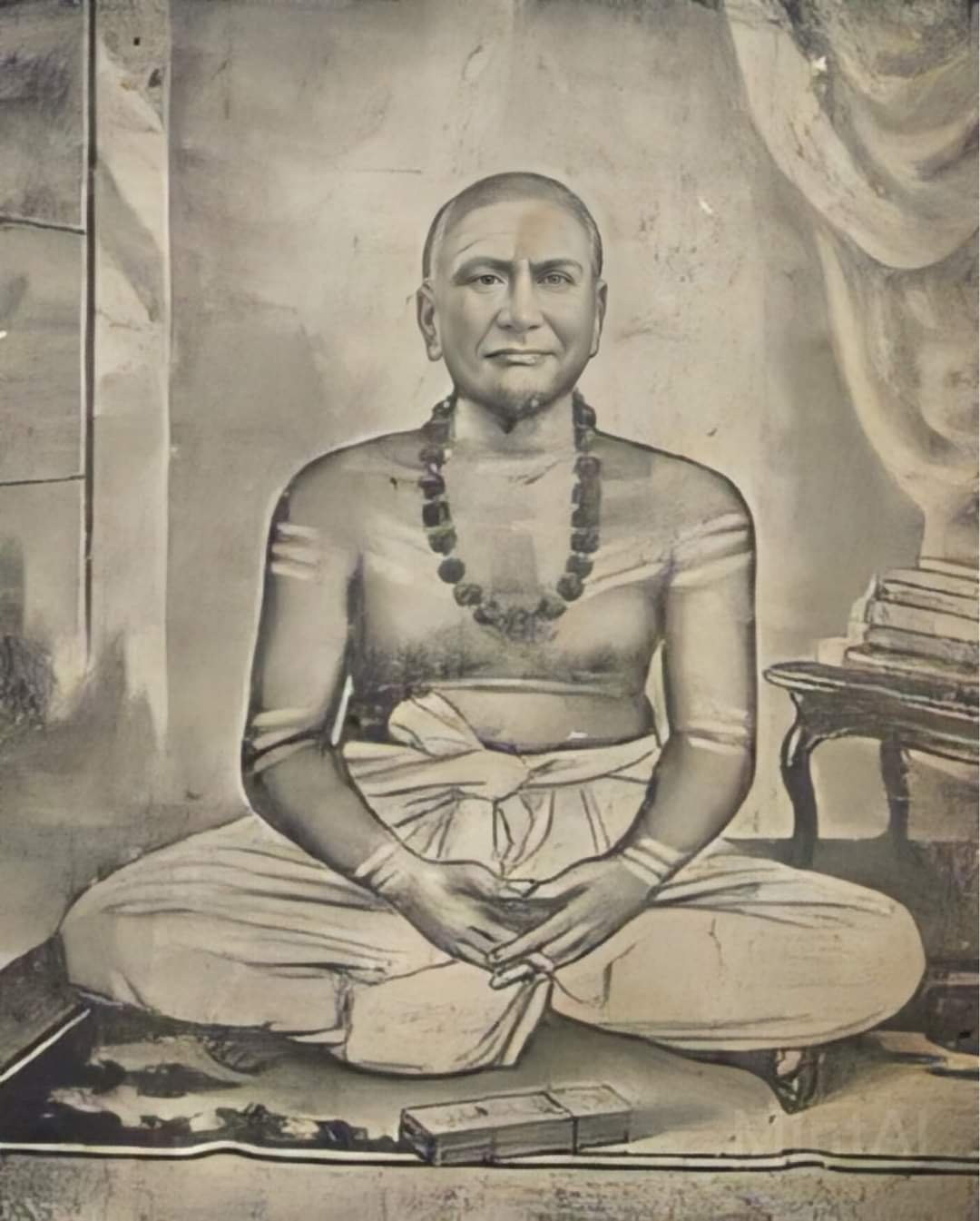
திருக்கயிலாய பரம்பரைத் திருவாவடுதுறை ஆதீன மஹாவித்துவான் சைவத்திரு மீனாட்சி சுந்தரம் பிள்ளை அவர்கள் பிறந்த தினம் இன்று
ஒவ்வொரு தலபுராண ஆசிரியரும் ஒவ்வொரு வகையில் அவையடக்கப் பாடல்களைப் பாடிச் சிறப்பித்திருக்கக் காணலாம். எடுத்துக்காட்டாக,
திருவம்பர்த் தலபுராணத்தில் பெரும்புலவர் மகாவித்துவான் மீனாட்சி சுந்தரம் பிள்ளையவர்கள் கூறும் அவையடக்கப் பாடல்கள் அவர்தம் பெரும் புலமையைச் சுட்டுவன. இவர்தம் ஆறு பாடல்களும் சுவைபட அமைந்துள்ளன.
இறையருளே துணை
பிரமதேவர் வழிபட்ட திருவம்பர்ப் பிரமபுரேசரின் புராணம் பாடுவதற்கு உனக்குத் தகுதியில்லை என்று சிலர் கூறக்கூடும், ஒரு காலத்தில் திருமால் முதலிய தேவர்களும் கூடத் தன்னை அசைக்க முடியாதபடி நிலை பெற்று நின்று, ஒரு துரும்பும் கூட வெற்றி பெற்றது என்னும் வரலாற்றைக் கேனோபநிடதம் கூறுகின்றது. ஆதலின் இறையருள் பெற்றால். இறையருளைத் துணையாகப் பற்றினால், எளியவன் ஆகிய யானும் இந்நூலைப் பாடுதல் இயலும்.
“பிரமனார் பூசை கொண்டு பெருந்திருக் கோயில் மேய பரமனார் புராணம் பாடும் பண்புனக் கில்லை என்னில் உரமனார் அணங்கி னோர்முன் னோரைவெல் துரும்பு போலத் திரமனார் அருள்இ லேசம் சேர்தரின் உண்டாம் அன்றே.
திரிசிரபுரம் மஹாவித்வான் ஸ்ரீ மீனாட்சி சுந்தரம் பிள்ளை அவர்கள் இயற்றிய புராணங்கள் எழுபதிற்கும் மேற்பட்டன. பதிகம், பிள்ளைத்தமிழ், கலம்பகம், கோவை, யமகவந்தாதி, திரிபந்தாதி, பதிற்றுப்பத்தந்தாதி, மாலை, தூது என்று பல பிரபந்தங்களும் இயற்றியுள்ளார். அவைகளில் 44 பிரபந்தங்களை திரு உ.வே.சா ஐயரவர்கள் பதிப்பித்துள்ள பிள்ளையவர்களின் பிரபந்தத் திரட்டிற் காணலாம்.
“ஈசுரர்களுக்குள்ளே பரமமகேசுவரராயும், தேவர்களுக்குள்ளே மஹாதேவராயும், மேலாய பரமபதியாயும்,புவநேசராயும், ஸ்துதிக்கற்பாலராயுமுள்ள அந்த மஹாதேவரை அறிகின்றோம்” என்று ஸ்வேதாஸ்வதரோபநிடதம் குறிப்பிடுகிறது.
Transliteration :
tam-īśvarāṇāṃ paramaṃ maheśvaraṃtaṃ devatānāṃ paramaṃ ca daivatam ।
திருவிழாக்களில் ஈசனை வலம்வந்தால் ஒவ்வோரடிக்கும் அசுவமேதப் பலன் கிட்டும்( சிவபுண்ணியத்தெளிவு 34) ஏதாவது ஒரு காலம் வலம் வந்தாலும் ஏழு பிறவிப் பாவம் போகும்; திருவிழாவில் நாள் தோறும் வலம் வருபவர். உருத்திரப் பதவியை அடைவர் (சிவபுண்ணியத்தெளிவு 37)
திருவிழா ஆரம்பத்தில் இடபக் கொடி ஏற்றப்படும்; அவ்வமயம் அக்கொடிப் பின் சென்று வலம் வருவோர்க்கு பூமி, பொன், புத்திரர், பெளத்திரர் முதலிய செல்வம் பெருகும். (சிவபுண்ணியத்தெளிவு 35)
இடபக் கொடியை ஏற்றும் காலத்துச் செய்யப்படும் நிவேதனமான இடப நிவேதனத்தை அன்போடு ஏற்று அருந்தும் பெண், மலடி என்று நிச்சயிக்கப்பட்டிருந்தாலும் சிறந்த மகவைப் பெற்றெடுப்பாள் (சிவபுண்ணியத்தெளிவு 36)
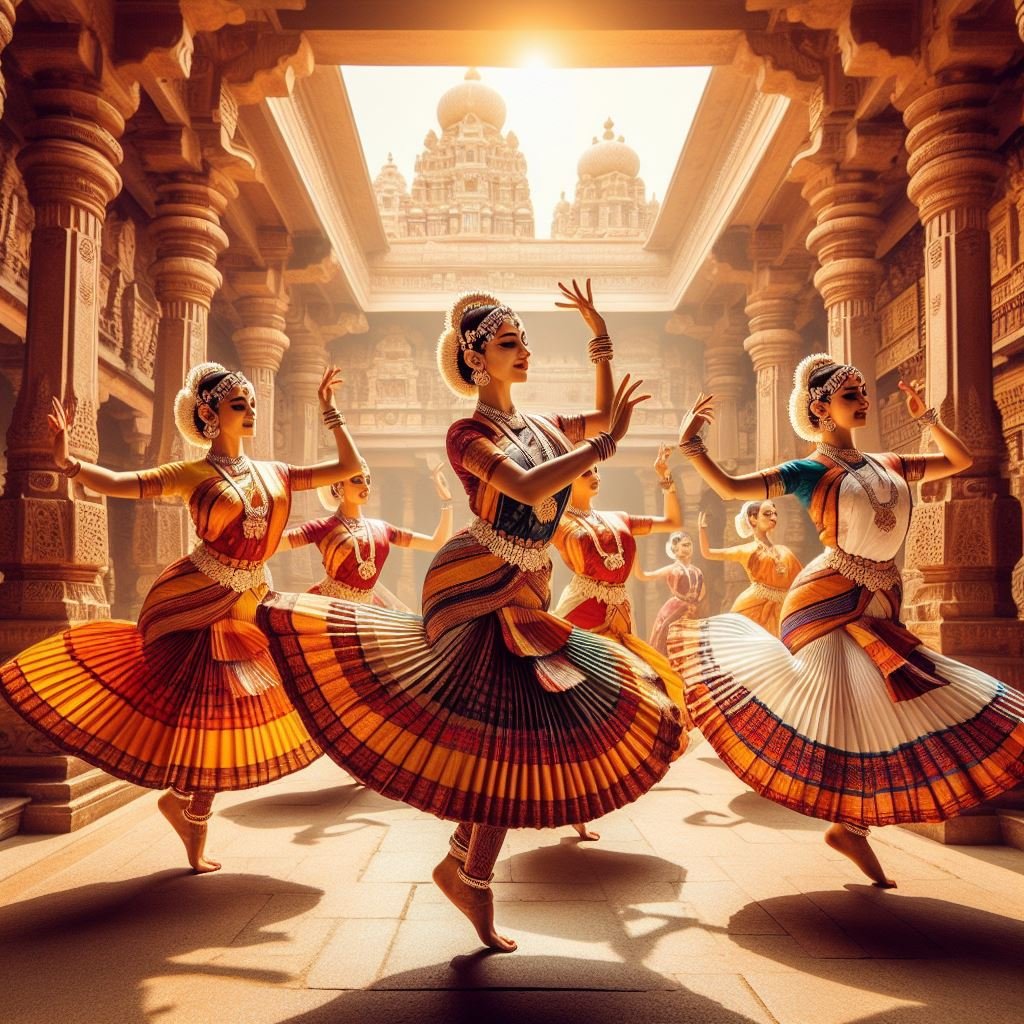
Devadasis or Devaradiyars, who were basically dancers & servants in the temple, held a respectable place in the society during the age of Tamil kings before the demeaning of them started at a later age. The inscriptions in the temple mention them in high regard.
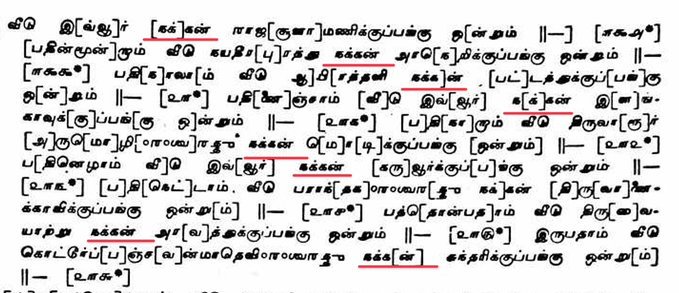
Devadasis or Devaradiyars, who were basically dancers & servants in the temple, held a respectable place in the society during the age of Tamil kings before the demeaning of them started at a later age. The inscriptions in the temple mention them in high regard. The Rudra Kanyas, as they are called need to go through a proper Diksha before being appointed as dancers. Kamika Agama gives the Diksha process for them which involves doing poojas to a stick (Kol). That’s why they are also called as Dandini (or Koli in Tamil) and the name of their leader is Thalaikoli. They have the prefix as ‘Nakkan’ which prof. Sankaranayarayan opines that came from Nagna. They were born to Siva when he came as Bikshadana & hence they are in fact daughters of Siva according to him. When we look at the longest inscription in Thanjavur temple, it says Rajaraja Chola employed 400 dancers to the temple and most of them have ‘Nakkan’ as their prefix.
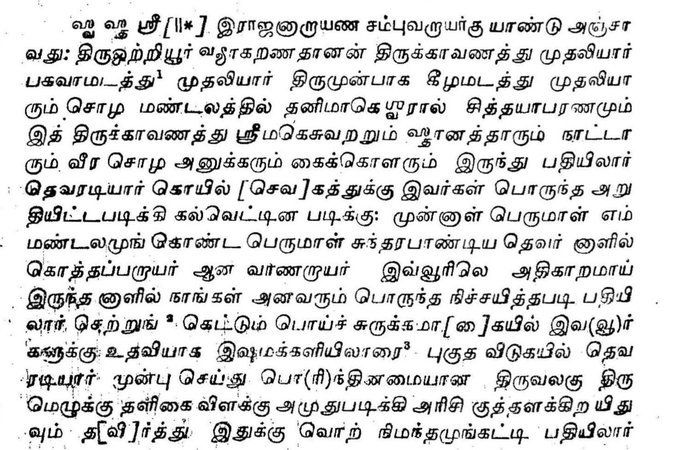
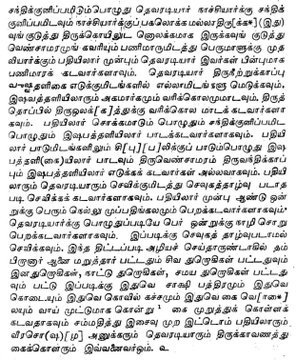
An inscription in Thiruvorriyur temple which belong to Raja Narayana Sambuvaraya period says there were three types of Devaradiyars who were performing duties in the temple. It says that a number of ‘Pathiyilars’ who were appointed during the time of Jatavarma Sundara Pandya, died and hence the temple authorities appointed ‘Rishabha Taliyilar’ to assist the remaining pathiyilars.
Pathiyilars played ‘Sokkam’ (which is basically Suththa Nruthyam in Tamil) and Rishabha Taliyalar’s gave vocal support. They also performed ‘Agamarkam’ and ‘Varikkolam’ dances. The third type ‘Devaradiyars’ performed ‘Sandikkunippam’ a dance form in the shrine of the goddess. The work done by them like ‘Tiruvalagu’ (sweeping), ‘Tirumezhuku’ (cleaning with cow dung), Taligaivilakku (cleaning utensils), cleaning the rice were taken out from them and given to others, says the inscription. This clearly gives us the details of work and the dances performed by Rudra Kanyas.
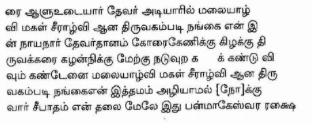
In addition, there are number of inscriptions which mentions about the donations given by the Devaradiyars to various temples. For example, an inscription in Thiruvalanjuzhi says one ‘Atkondan Thevu’, a devaradiyar from that place gave grants for Nithya Pooja. Another one in Thiruvakkarai mentions about a land donation made by a devaradiyar named ‘Seerazhvi’. So Devaradiyars as such were held in high esteem and were temple servants and had to undergo a proper Diksha process to get appointed even.
It also needs to be stressed that these are voluntary works undertaken by few without any force whatsoever. They were also free to go out of it and can take a regular life outside the temple if they wish.
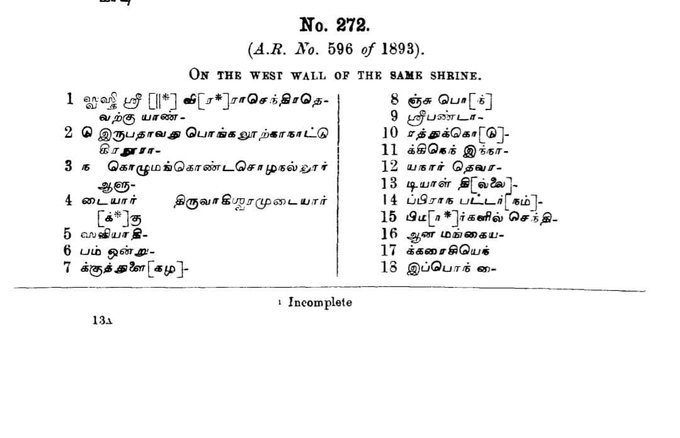
The sacred work of Devaradiyar later became subject to various scandals. One of them is that it was created by some Brahmins. That is wrong. There are Brahmin women in the divine service called Devaradiyars. In this inscription, “Devaradial Thillaipran Pattar Nambimaril Sentyana Mangaiyarkarasi” belonged to a Brahmin clan. This inscription mentions his donation.
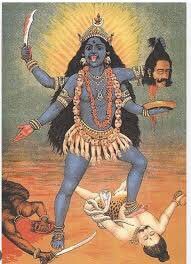
The Siddhānta explains Kālī as a name denoting the particular function of ŚIva’s śakti in relation to concealing a bound soul’s (Paśu’s) vision. One can clearly see how concealed is his understanding & intellect. 🙂 https://t.co/Mi8yX5gBTthttps://t.co/zNQOF1XZG3
The Siddhānta explains Kālī as a name denoting the particular function of ŚIva’s śakti in relation to concealing a bound soul’s (Paśu’s) vision. One can clearly see how concealed is his understanding & intellect.
Just to explain a bit, JBP sees in Kālī’s imagery the Jungian archetype of the Devouring Mother. His own words on that archetype here:
JBP’s tweet referring to Kālī being worshiped at Universities seems absolutely random till you see this piece of prose linking the Devouring Mother & Western Universities/Academia.
It’s actually a bizarre comparison because the Upāsana of Kālī will help accelerate the consumption of Karma (good & bad) & that brings the soul more out into the open than ever, rather than protecting the soul from difficult experiences.
Identifying Kālī with woke movements that use political correctness & protection if the offended/“oppressed” as a pretext to justify the suppression of free speech is even more bizarre.
Fierce deities like Kālī are specifically & often singled out as being for those of a strong mind, not for the weak-hearted ones; certainly not those who play victims all the time.
In trying to make sense of an increasingly unstable society in which he has to live & earn, JBP has unthinkingly superimposed his own Jungian-inspired nonsense to Kālī’s deep & profound imagery.
Kālī, when understood properly, does not infantilize Her bhaktas but makes them impregnably strong Vīras just as Śiva makes His ones glorious Rudras who create awe even as they walk on earth in the guise of mortals.
Kāli does devour but the devouring is not directed towards Her worshipers, who are indeed her children, but towards the internal impurity (the power of mala) that limits a soul’s true & godly potential.
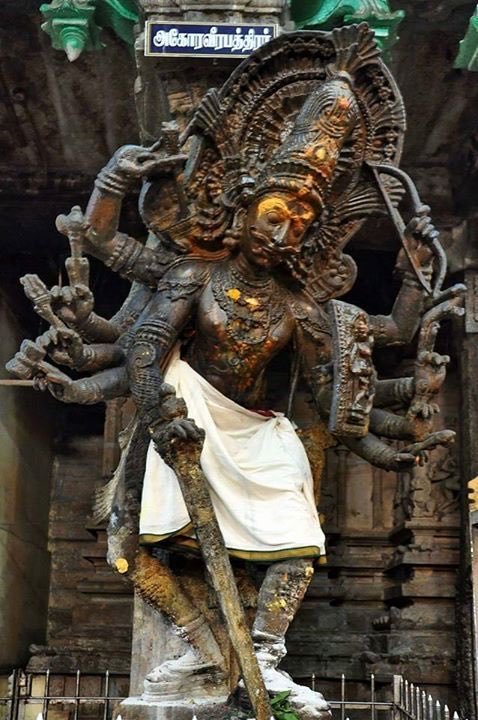
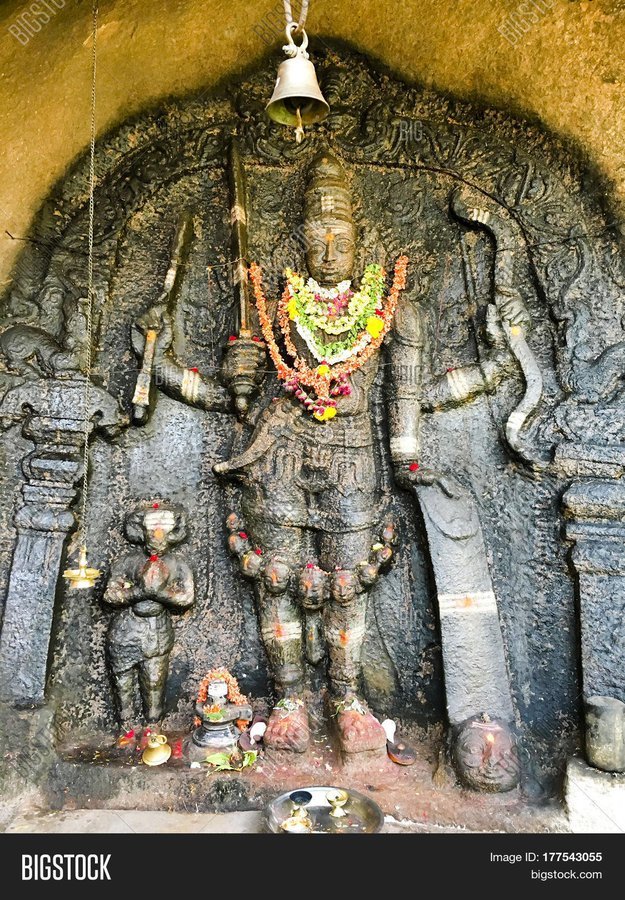
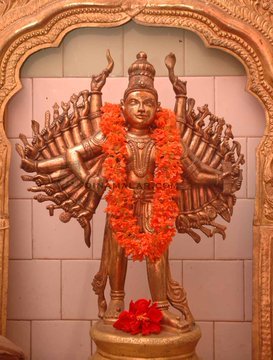
The awesome deity Sri Aghora vIrabhadra at the home of mInAkSI sameta somasundareshvara svAmi at maduraivIrabhadra svAmi with the humbled dakSa standing by his side; beautifully engraved in rock at Shivagange temple near Bangalore
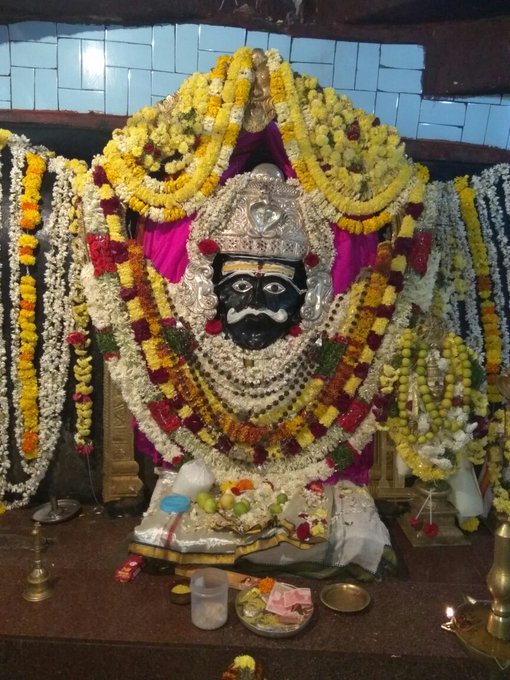
pralayakAla vIrabhadrasvAmi; may he grant us the dhairya we need to see through all challenges: mUlamUrti
utsavamUrti
koilakonda vIrabhadrasvAmi (kAkaTIya-era temple)vIrabhadra from an old yAdava temple in the marATha country flanked by bhadrakAlI & cranially refitted dakSha+wife
We are often told that that the raids by chOzha emperor rAjendra I on the shrIvijaya-s were due to the latter's "interference with trade". Unfortunately, the exact nature of interference has been, for long, elusive to us.
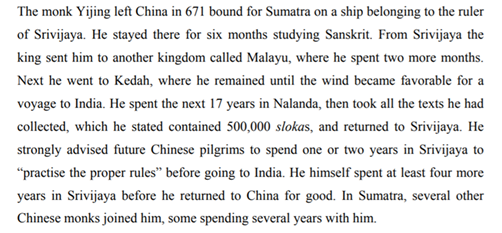
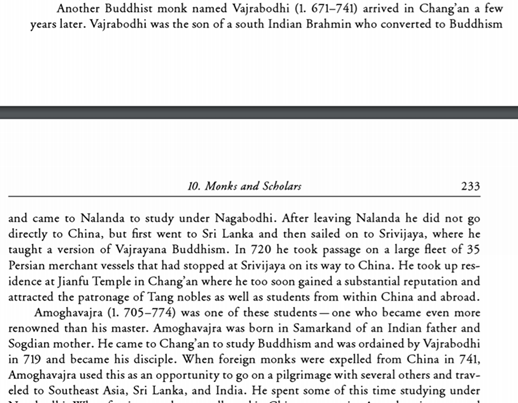
We are often told that that the raids by chOzha emperor rAjendra I on the shrIvijaya-s were due to the latter’s “interference with trade”. Unfortunately, the exact nature of interference has been, for long, elusive to us. It has been elusive for even the erudite nIlakaNTha shAstri as we had always relied on Indian documents. So what was this “interference”? An interesting (& rather hilarious) answer is found in the work of Tansen Sen & Noboru Karashima. This role of shrIvijaya as an entrepot state par excellence can be traced to the last decades of the seventh century. We know this from the accounts of bauddha monks such as the cIna Yijing, vajrabodhi (from kA~nci) & the renowned amoghavajra of bAhlikadesha (Uzbekistan).
Yijing left cInadesha on a ship bound for shrIvijaya where he spent 6 months studying saMskRta & would hop between various S.E.Asian cities before he finally got a chance to leave for bhArata & would reach Nalanda, Bihar where he spent a good 17 years.
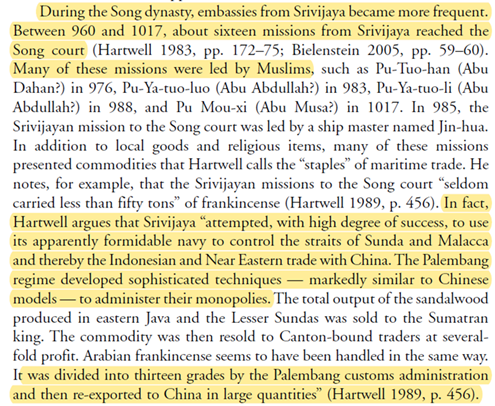
Coming back to shrIvijaya, Tansen Sen points out that diplomatic missions from shrIvijaya to cInadesha became rather frequent during the Song dynasty. There were 16 such missions in the period between 960 & 1017 CE. Sen notes the shrIvijaya ambition to monopolize trade.
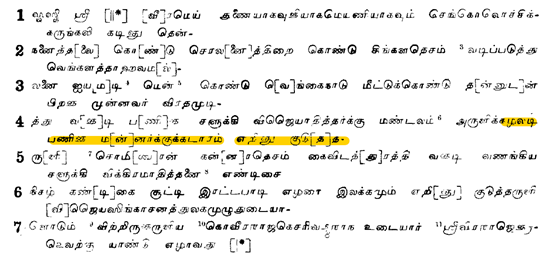
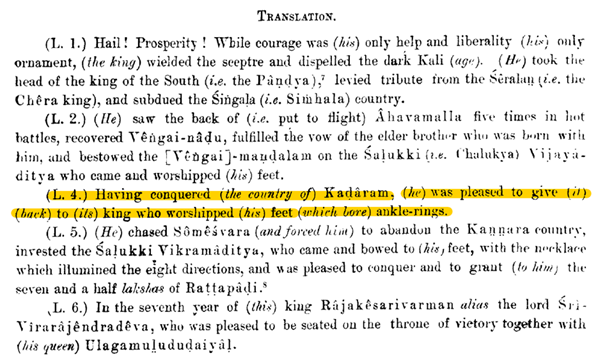
Now, before we move on, let us sort out a few key dates here. The chOzhas sent their very 1st mission to cInadesha in 1015. rAjendra-I launched two raids in the years 1017 & 1025 on shrIvijaya. But in 1068, vIrarAjendra invaded kadAram (shrIvijaya) before reinstating its ruler! This is rather puzzling. Why would he send the chOzha military across the seas & then immediately reinstate the king? nIlakaNTha shAstri reads the inscription (SII, Vol.3, Inscription No.84) as indicating that vIrarAjendra reclaimed kadAram for the abdicated shrIvijayan ruler.
Whether this was done to favor the shrIvijaya king or was it hostile in intent like the raids of 1017 & 1025, I am not too sure. But in any case, it confirms that shrIvijaya was a dependent protectorate of the chOzhas by & in 1068.
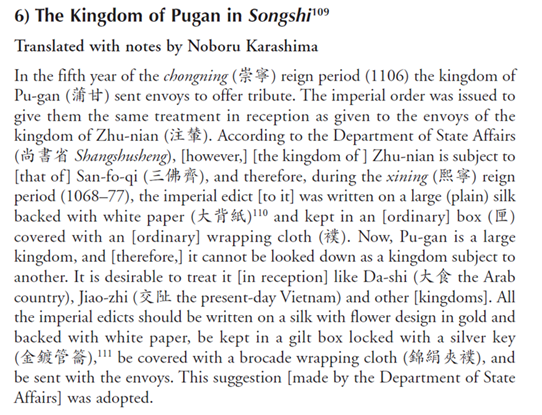
We now look to the Songshi, the official historical account of the Song dynasty of the cIna-s, one of 25 such documents chronicling the histories of various dynasties. It is funny that we should get our motive behind the 1017/1025 raids from a letter in the Songshi dated 1106. It is a letter (a “memo” of sorts) to the Song Emperor Huizong, expressing an objection by a Minister to the royal order to receive diplomats from the Pagan Kingdom (蒲甘—púgān, Myanmar) with same honors as chOzha (注輦—zhùniǎn) embassies.
In the letter, the zhùniǎn (chOzha) are described as a vassal of the Sānfóqí (三佛齊—shrIvijaya)!! The Chinese had thought in 1106 that the mighty chOzhas were the vassals of the shrIvijayas despite the fact that this of course is complete nonsense!! What’s going on?!
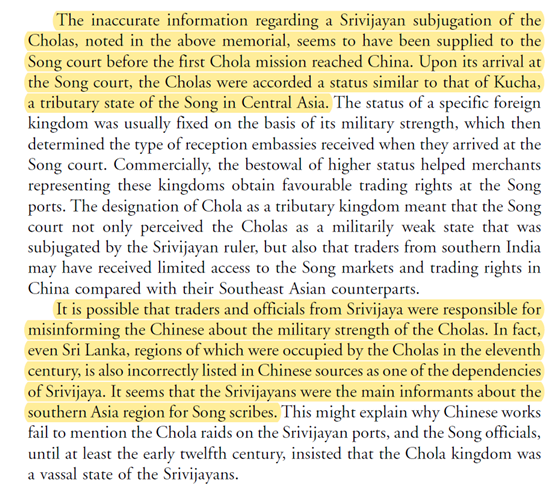
Sen surmises that for a century or even a little more, the shrIvijayans had been using their status as the primary entrepot/transit state to pass false data to the Song officials that the chOzhas were their vassals & had even done the same to siMhaladesha!
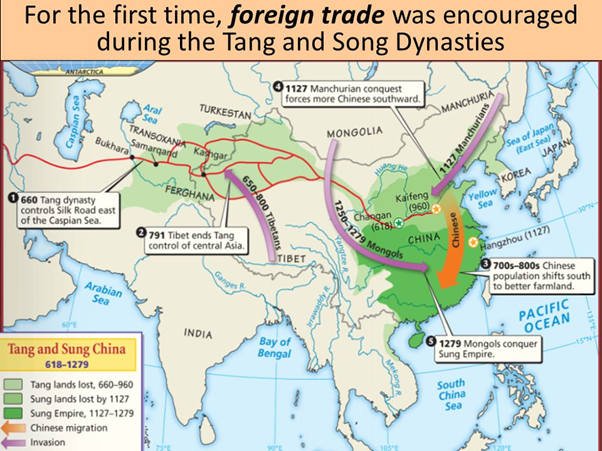
To understand how something ludicrous could happen, we have to understand that the Song world was rather distant from the chOzha world & communications were not quite like what they were today. So, what were the consequences of such false intelligence?
Sen explains that chOzha traders lost preferential access to Song markets as the cInas perceived them as a militarily weak dependency, having been “tricked” by the shrIvijayans into believing so. & even after the raids, the cInas continued (till 1106 as seen above) believing it!
However, the raids did wield tremendous damage to the shrIvijayans at that time & post-raids, we are informed that they did not manage to send embassies to cIna (their trading fleet & economy being rather wrecked).
The geopolitical lessons from this rather funny story may seem to be irrelevant in light of how communications & intelligence works today. But it is perhaps interesting to see how states/economies/trade worked once & how the cInas had always responded when they smell weakness.
Source : From chapter 3, “THE MILITARY CAMPAIGNS OF RAJENDRA CHOLA AND THE CHOLA-SRIVIJAYA-CHINA TRIANGLE” by Tansen Sen in “Nagapattinam to Suvarnadwipa: Reflections on the Chola Naval Expeditions to Southeast Asia” (2009).
Note : Please also see Appendix II of the above-mentioned book, “Chinese Texts Describing or Referring to the Chola Kingdom as Zhu-nian” by Noboru Karashima & Tansen Sen.
The astounding beauty & genius that is cOzha public administration; but first, we need to understand a contrasting, negative experience pic.twitter.com/K8OhXofcim
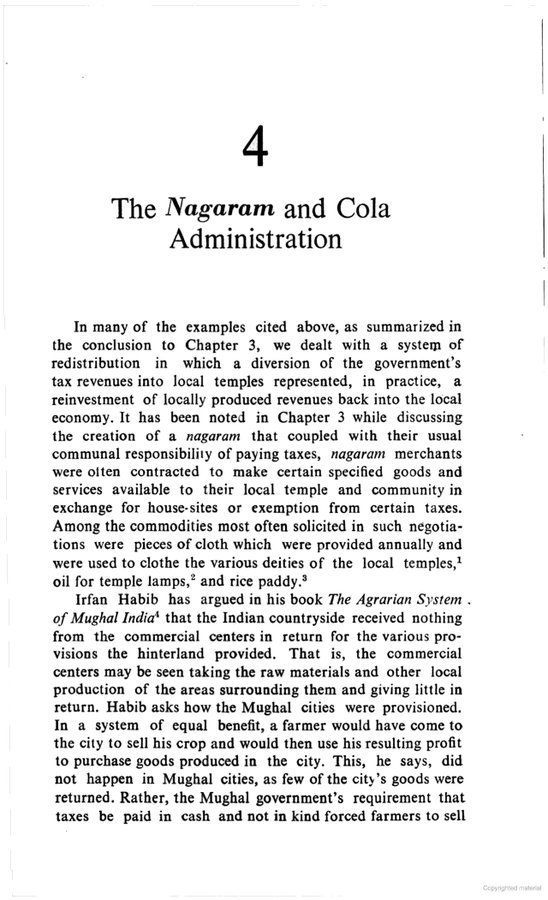
The astounding beauty & genius that is cOzha public administration; but first, we need to understand a contrasting, negative experience.
A contrast to the exploitation marking mughal public administration was the community-centered cOzha approach.
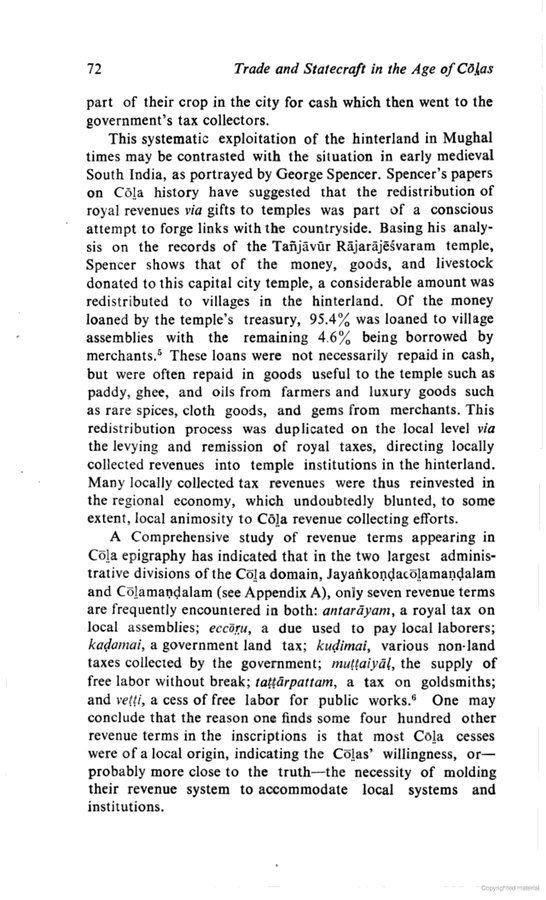
More than 95% of the money loaned out from the temple of rAjarAjeshvara (Shiva, named after the king) went to the villages, the countryside. At a time when central incursions into local administration by means of taxes were resented, the conscious reinvesting in local economies served to generate goodwill.
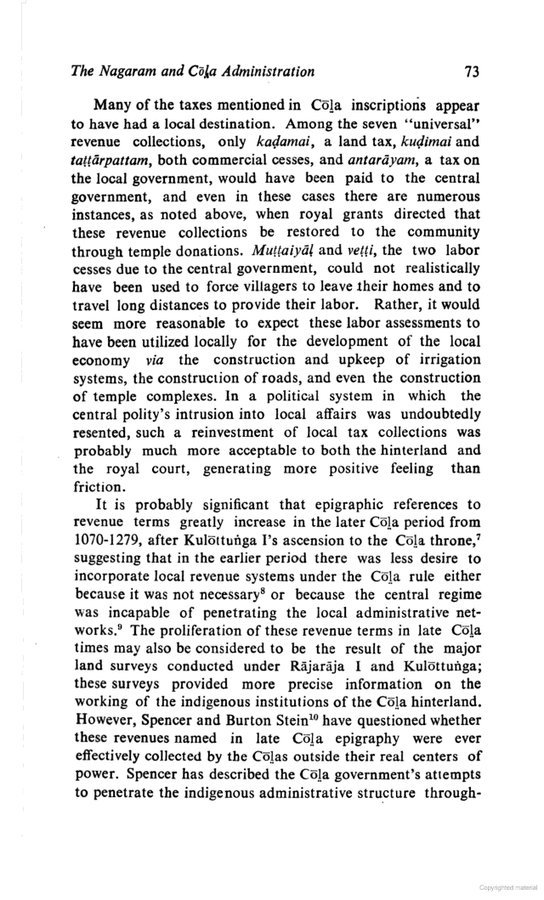
The cOzha administration didn’t involve itself merely in an exercise of taxation & redistribution but also prioritized commercial justice. It saw to it that offenses like misappropriation of funds were swiftly corrected and fines imposed on culprits.
The nagarams, administrative units/teams were semi-autonomous, too, in their commercial and legal operations & more importantly in a Hindu point of view, made the temple the heart of administration by having temple monies deposited with them for investing.
Temples were the biggest investors in nagarams but private citizens of standing could invest as well: money, gold, livestock, etc
What did this mean in practical terms? The monies, gold, livestock, etc. were deposited with a guaranteed rate of interest & were allocated. In this set-up, the temple wealth could be gainfully harnessed without priests themselves getting directly involved in financial activity.
A fully centralized approach to public administration where the iron hand of the state forcefully swings, does not work in reality. rAjarAja 1 realized that lasting goodwill, deeply entrenched public support for the cOzha rAjyam can only be realized by carefully managing both the centralizing tendency natural to ambitious kings & the imperative to partially decentralize by granting autonomy to certain bodies. Monies, gold, livestock, etc. were extremely important part of this sophisticated administrative set-up. But what was the quintessential “medium”, the “language” through which the central (cOzha) administration & the autonomous nagarams “communicated” & dealt with 1 another?
1 word answer: Temples. Again. These commercial/trading nagarams, being granted the autonomy & right to invest, displayed their gratitude to the rAjyam by undertaking, for eg, to contribute the entire income from 1 of the villages in their control to the temple at the capital to the temple at the capital of tanjAvUr, the great temple (bRhadIshvara AKA rAjarAjeshvara).
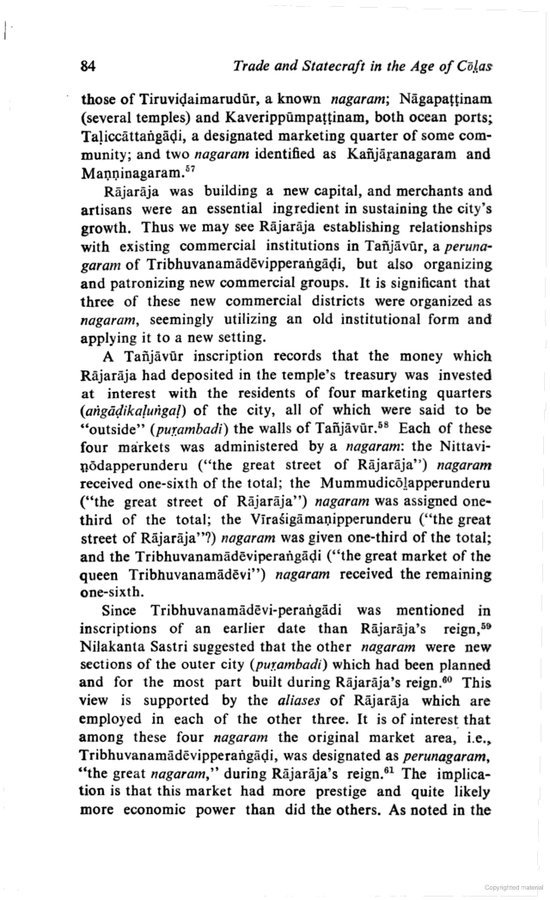
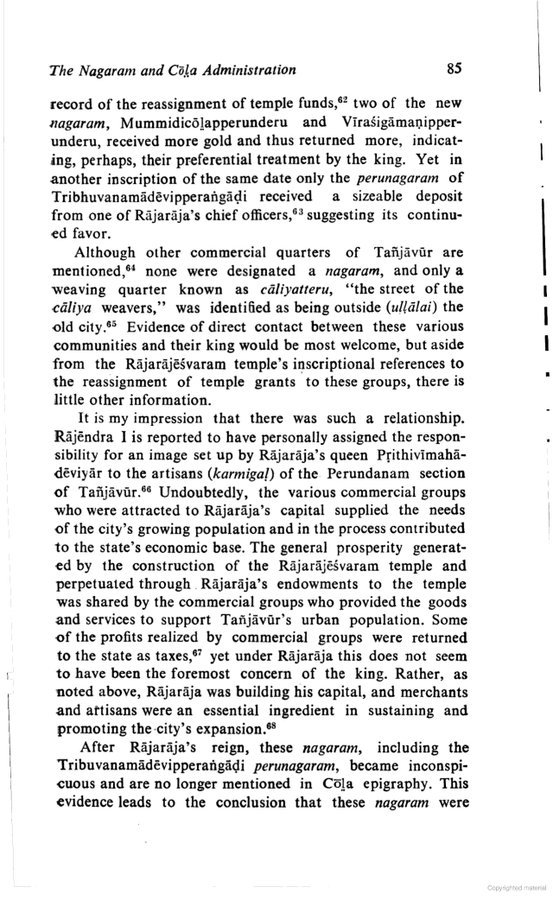
The scholar referred to in the screenshots Spencer, understands it as a way to cut the ties between local citizens & local institutions. One can also understand its aim as to prevent an unhealthy chasm from developing between the countryside and the capital. It was not an uncommon case in the old world that many commoners in the countryside would have even seen the capital. In my understanding, such transfers by rAjarAja 1 indicate an attempt to facilitate greater integration between the capital and the country.
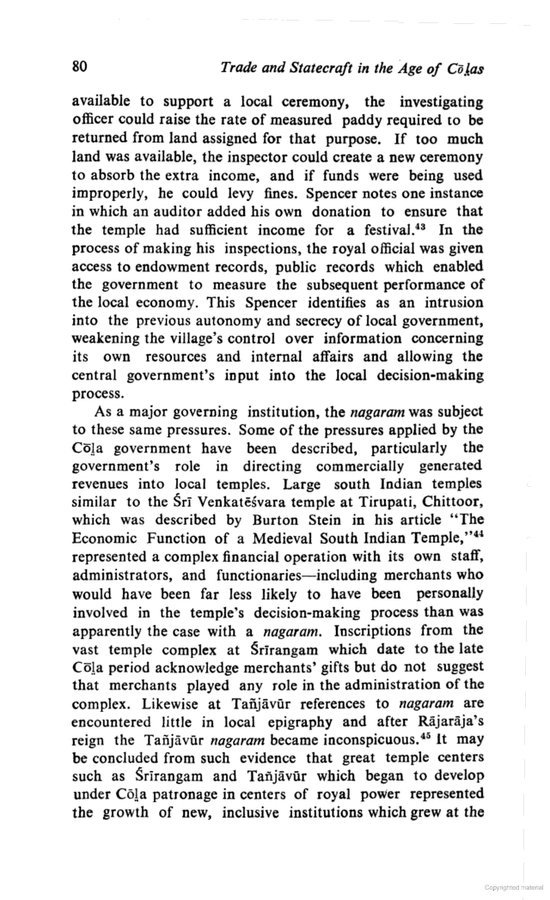
So what about local temples outside the grand capital? What if the temple did not receive enough paddy income to finance a local ceremony? If insufficient, the officer in charge could raise the required rate of paddy to be returned (the non-cash interest owed to the temple) What if a local temple had a lot of lands under it and consequently excess paddy? It was not wasted. The officer from the capital could excess paddy was utilized for an annadAna ceremony of sorts after presenting it to the deity. The administration of local temples by cOzha:
See, the nagarams are basically trade/investment corporate bodies. and before rAjarAja, a mere part of district-level administrative bodies. Following rAjarAja’s bold administrative reforms and advances, the nagarams were motivated to develop trading links with others outside their own little villages/towns, especially in the capital. Now, these nagarams could directly interact with the rAjyam at the capital. This may raise a question as to whether the nagarams then abandoned their links with the villages or towns they were based in? Though the author does not identify all the issues in one place (as he could have), I have made a few notes based on what I have read so far.
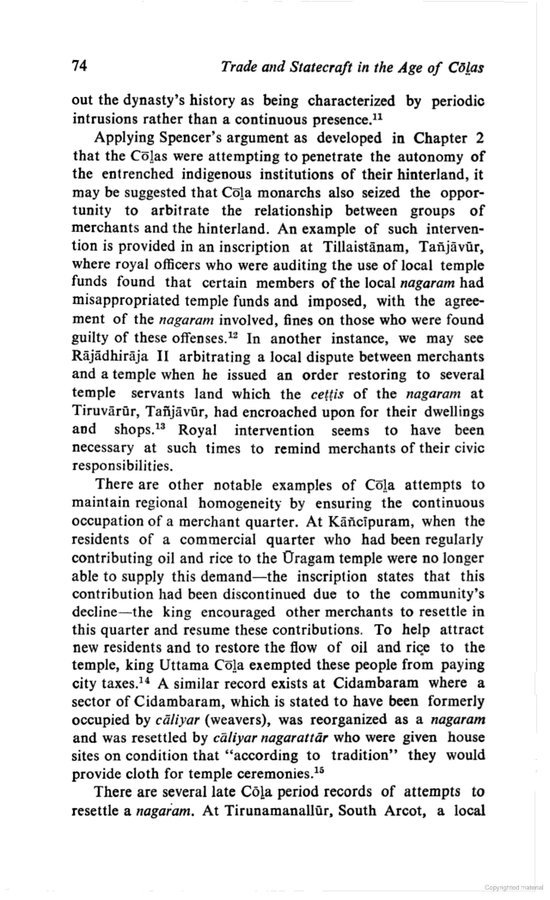
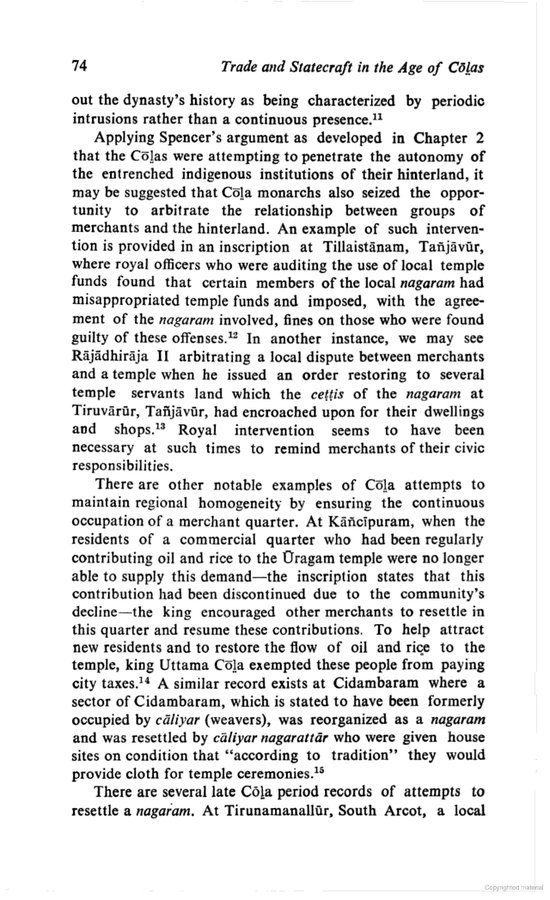
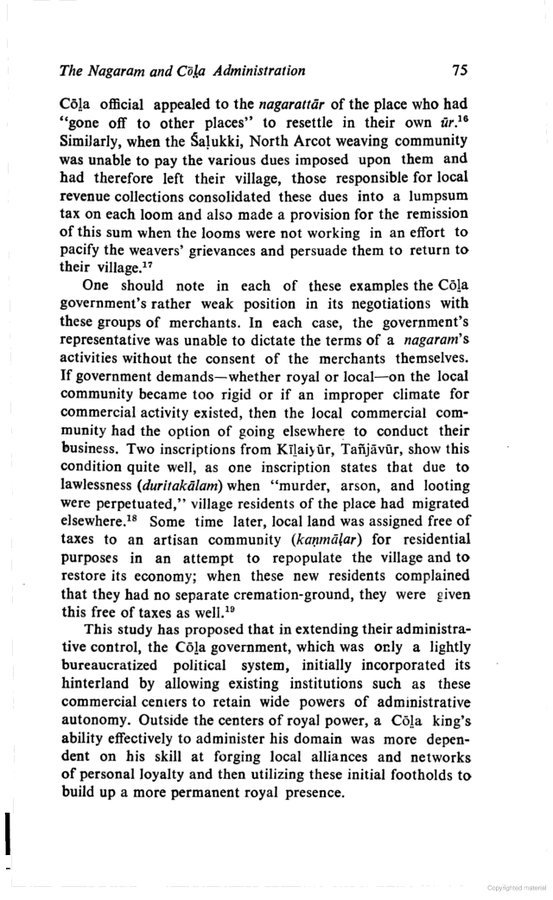
Firstly, it must be admitted that it wasn’t unheard of for nagarams to move away from a village/town to another if situation was really dire. Abandonment of commercial quarters (a modern analogy would be the urban decay of automobile hub, Detroit city) was not unheard of:
Villages/towns were abandoned not just due to bad business but sometimes lawlessness in a particular village.
A new mercantile (nagarattArs) or artisanal (kammALars/vishvakarma-s) community was able to negotiate with the government and acquire residential and cremation lands, free of taxes. Such arrangements helped rejuvenate the local economies. Based on how the author has written, one may be tempted to hold that such commercial bodies/guilds could move at their whim and fancy. I don’t think that is a right supposition. As the cOzhas reformed law & administration, there must have been a proliferation of nagarams and it must have been rather difficult for nagarams to simply abandon their villages/towns and directly compete in the capital.
Coming back to the issue of nagarams which drifted away from local-level bodies (nADu) and interacted with the capital directly they continued to be based in their nativities while expanding the trade volume by having contacts with their counterparts in the capital. Once again, the local nagarams continued to maintain their local links and harbor goodwill with the same medium: the temple.
Merchants continued to play a vital role in dhArmika acts–i.e. A charitable vaishya was in fact called dharmachetti (chetti-shreSTHi, seth).
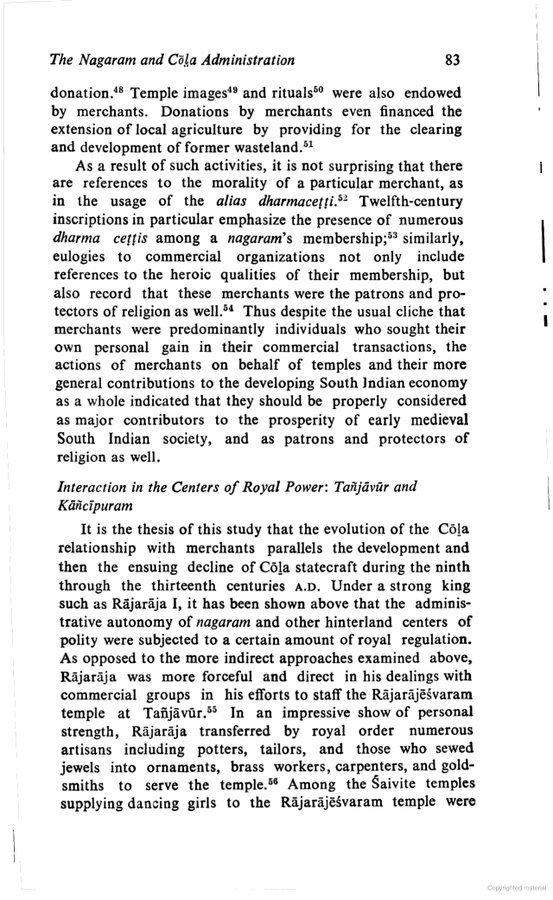
One can see two seemingly contradictory strands in rAjarAja 1’s “theory” of administration. Firstly, he enabled greater commercial freedom for the nagarams and made it easier for these bodies (Which were the ones really generating revenue) to do business and granted them the autonomy required for such purposes. Secondly, and sort of contrarily, he was unafraid to show power where needed (political consolidation). As one may go through earlier tweets, he compelled the transfer of staff from local temples to periyakovil (bRhadIshvara) at tanjAvUr.
Apart from what the author rightly calls an “impressive show of personal strength”, he also saw that nagarams, whether central or local, were supervised by central-level officers & fines were swiftly imposed on local nagarams for fund misappropriation. Central officers were One notes economic liberalization and ease of doing business limited both by regulations as well as personal power One gets reminded of LKY (Lee Kwan Yun, the late Singapore Premier) whose attitude towards easing up business went hand in hand with a no-nonsense attitude towards troublemakers.
Let’s continue! So let us get more insight into the relationship between the nagarams (Commercial bodies) & their biggest investors-the rAja
Here we see the concept of commercial markets (aNGADi: which, today, would refer to a store/supermaket). But in ancient cOzha usage it referred to proper trading/investment markets where a body corporate or private merchants from other cities/towns/villages and farmers came to buy and sell goods, based on what we have understood about the workings of nagarams thus far.
We see that a pEraNGADi (big market) in the name of tribhuvana mahAdevI (the wife of madhurantaka uttama cOzha) was especially prominent and received special support. It would be interesting to understand the reasons. As mentioned in last para on pg 84, it was the oldest at the time of rAjarAja cOzha. The above inscription records specifically the ratio in which the king’s donations to the temple treasury were allocated to the 4 markets. From the ratio, we see that rAjarAja wanted to invest more in these newly commissioned markets named after him.
Perhaps, a poignant question may arise for some (as it did for me): whether there were commercial entities who were not nagarams? Indeed.
It is unclear from the author as to the exact advantages of being constituted as a nagaram, though one could figure out some of these
We see above in pgs 84 & 85 that the 4 aNGADis managed by the nagarams were outside the city–This was a special commercial district with perhaps more space available for the markets. After all, the market of tribhuvana mahAdevI is known as a huge one.
Preferential treatment and increased direct access to royal monies meant increased capacity to trade and invest.
Nevertheless, rAjarAja seems to have engaged the services of non-nagaram institutions, certain artisanal guilds for personal projects.
Perhaps, to those interested in the economic aspects of chOzha greatness, you may want this book by an Indian Hindu author: “Cholanomics: Social Pursuit of Cholas with Temple as Epicentre” Title itself is very telling. Unfortunately, not on Kindle.
Before this thread moves onto other materials/sources and issues, there is a fundamental question which has not been answered or handled directly in this thread thus far. That question is: “Why was the temple chosen to be the cornerstone of the chOzha economic architecture?”
Unfortunately, I had not gone through this directly in the thread but it would seem rather obvious once stated. Temples were the biggest recipient of donations (from the king right down to a farmer whose harvest has done well; even devadAsis donated generously).
As a result, temples were most capable of being “angel investors” for a nADu (local agrarian unit) farmers, merchants, etc. See, a group of poor farmers may hesitate to borrow money from rich merchants/traders (who may reject) & moneylenders (who may exploit).
But they would not have hesitated to borrow from temples to which wealthy individuals & corporate bodies donated generously! This deeply entrenched institution of temple donation in the chOzha empire was perhaps the largest, voluntary & indirect wealth redistribution scheme.
Temples dealt by way of profit-sharing from investments, not usury. So, payment of loans by a poor farmer would be in the form of a reasonable share of yield, to be used by temple to make food or a certain number of sheeps/cows: butter for lamps, milk for kitchen, etc.
Thus, temples enjoyed an unparalleled inflow of capital, a great moral reputation, people did pay owed monies to temple due to immense stigma attached to misappropriation of the god’s monies; so it was overall a sustainable enterprise.
This is how the temple was the centerpiece of the chOzha socio-economic architecture.
Regarding the worship of a book by the उष्णीषधारीIAST Transliteration uṣṇīṣadhārī
Meaning – Sun Worshipper-s, even this meme, as most would know, has roots in हिंदु-धर्मIAST Transliteration hiṃdu-dharma
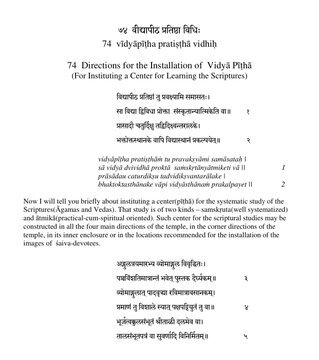
Meaning – Hindu Dharma. Nothing original. We see an example of that from the उत्तरभागा of the कामिकागम, going back to at least 500 years prior to the birth of the शिक्षपान्थी-s’ founder.
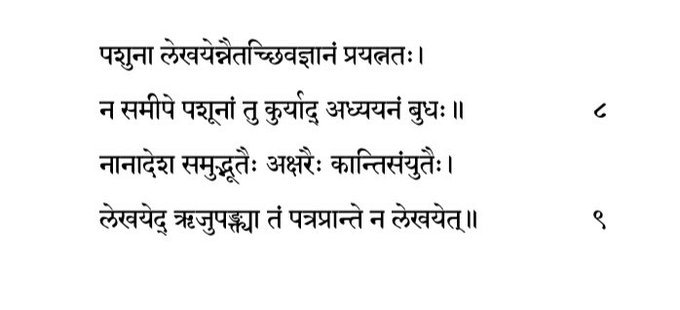
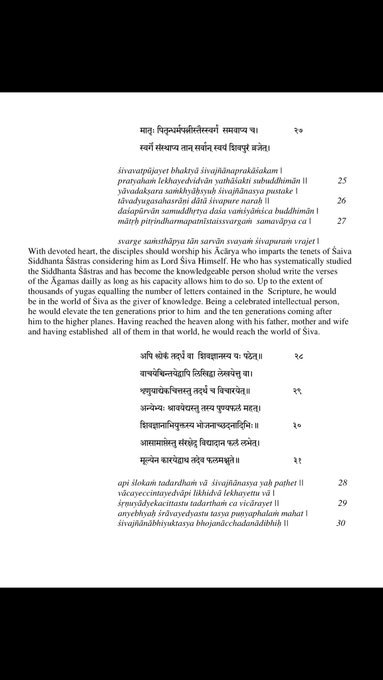
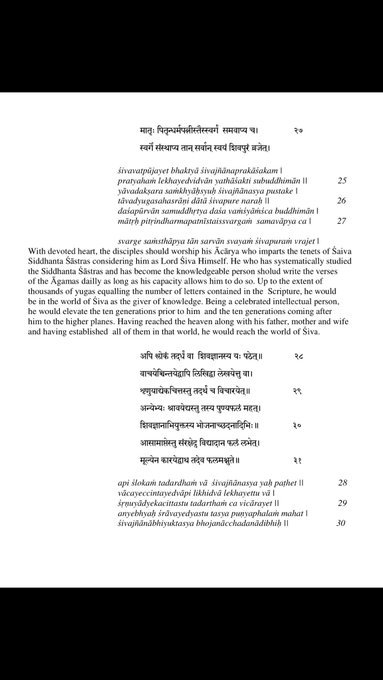
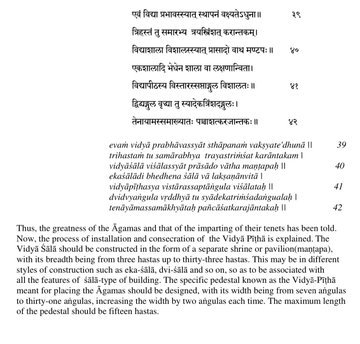
There will be a centre for studies (विद्यापीठ) in any of the temple’s 4 cardinal & 4 intermediate directions of the temple, or its inner circuit or, best, in the comforting presence of images of शिवभक्त-s. What materials to use for the book or for the pen? All detailed here.
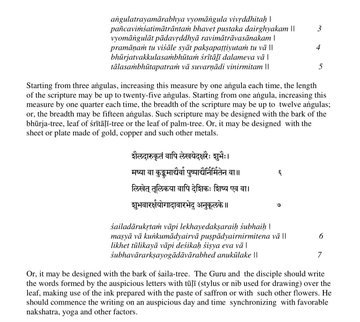
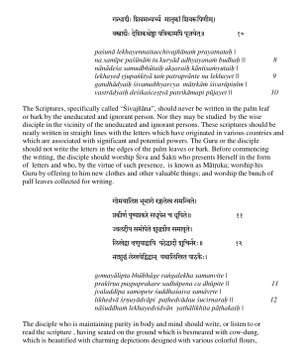
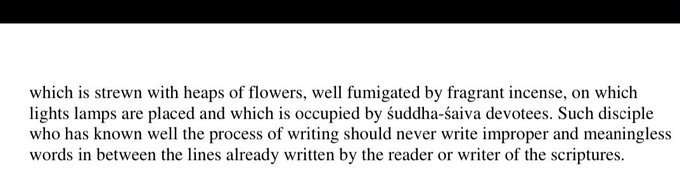
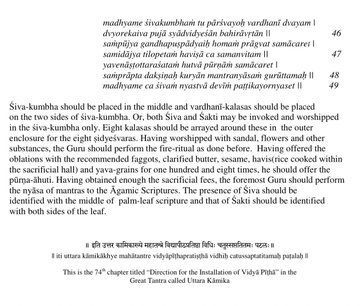
Sacred शैव scriptural wisdom should never be written down by the uninitiated (पशुः, पशवः) or studied in their presence by the wise. One going to write should worship शिव & शक्ति with incenses, show his appreciation to his गुरु & venerate the leaves he is about to write on.
The leaves are becoming conduits for transmission of precious knowledge. So, they too must be venerated (पत्रिकामपि पूजयेत्). Our धर्म breeds a culture of reverence, something those who are content with being cheap imitations of monotheists will never understand.
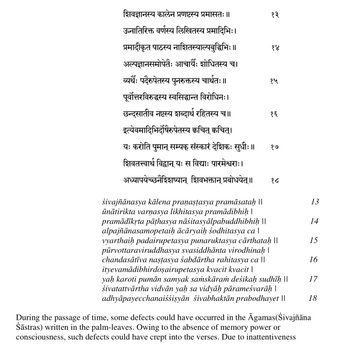
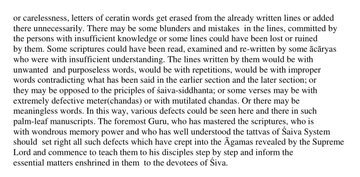
Textual criticism, or attempting to uncover the “most correct reading” to put it in lay terms, is no modern discipline. The expert writer assessed various copies (some of which were made by incompetent आचार्य-s), fix spelling, metrical & doctrinal errors & reconstruct the text.
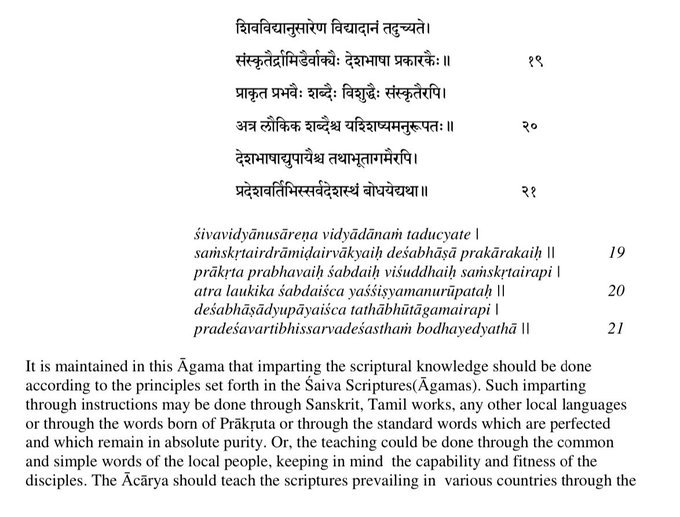
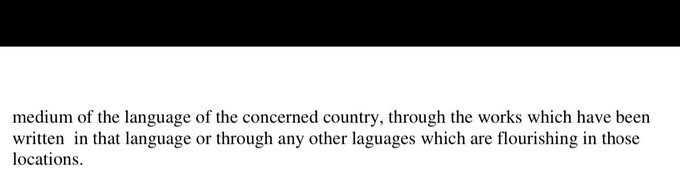
The teaching of knowledge can be done in different languages, whether it be संस्कृत, द्रामिड (तमिऴ्) or other देशभाषाषा-s or प्राकृत. The teacher can employ worldly usage (लौकिक शब्दैश्च) if necessary or local works. There is great emphasis on audience-focused teaching.
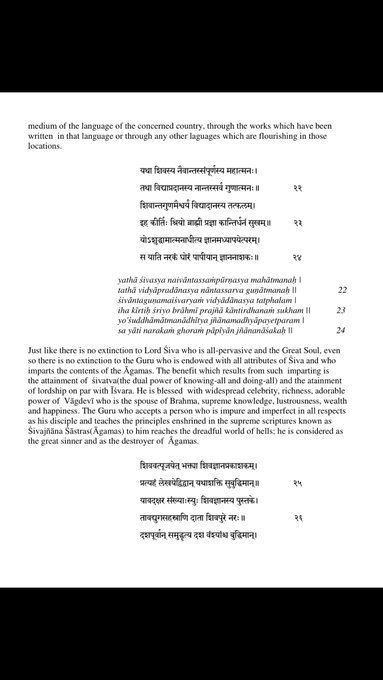
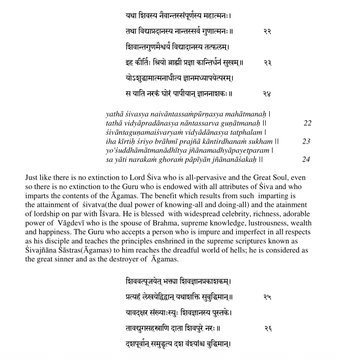
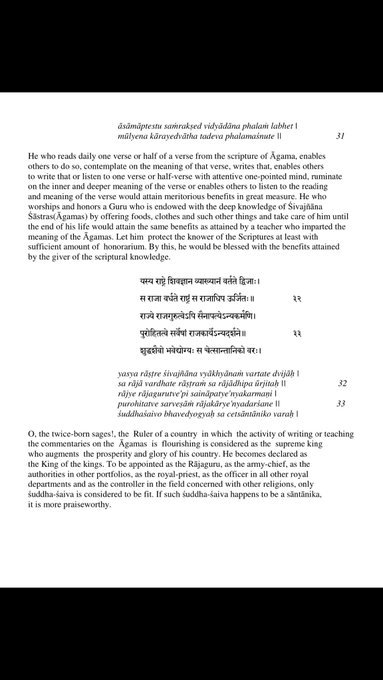
The blessings that reading, writing, contemplating, causing others to read & contemplate the आगम-s, bring to the person & the blessings their exposition bring to the king & the people.
And the text goes back to the ritual of consecrating the seat where the scriptures will be kept. Note the last point that the middle of the leaf-bundle is to be visualized as शिव & the top/bottom sides as शक्ति. This symbolizes the idea that शिव‘s “body” is शक्ति & he’s the self.
Note : Small error in above translation: Should read as *vidyeshvaras
Regarding the worship of a book by the उष्णीषधारी-s, even this meme, as most would know, has roots in हिंदु-धर्म. Nothing original. We see an example of that from the उत्तरभागा of the कामिकागम, going back to at least 500 years prior to the birth of the शिक्षपान्थी-s’ founder.