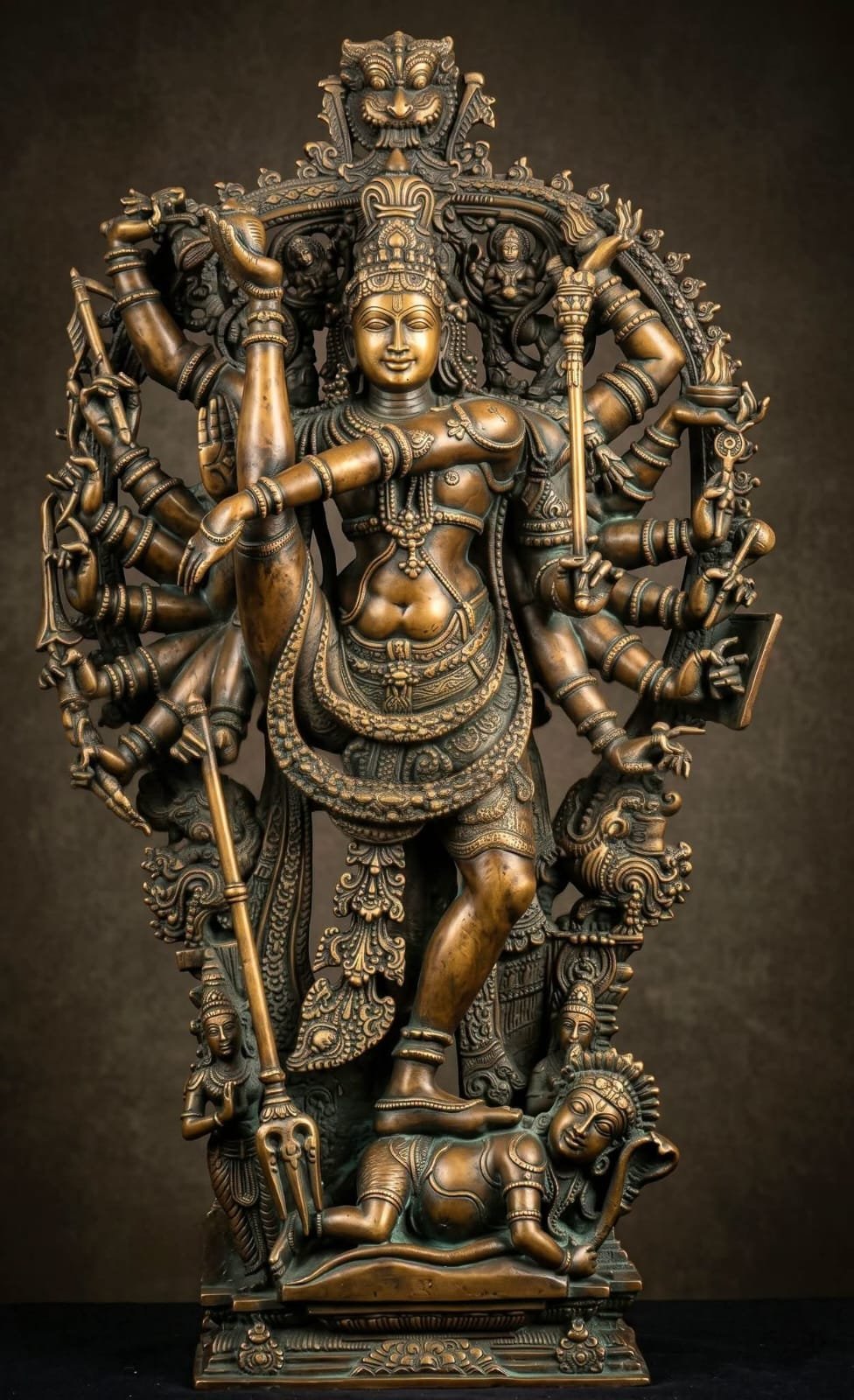
இறைவன் ஆற்றும் ஐந்தொழில்களின் விளக்கம்
1. படைத்தல் (Srishti / Creation)
படைத்தல் என்றால் இல்லாததைத் தோற்றுவித்தல் எனப் பொருள் அன்று; உள்ளதைத் தோற்றுவித்தலாகும். ஒவ்வொரு பொருளுக்கும் இரண்டு நிலைகள் உண்டு:
- காரணநிலை (சூக்குமமானது – கண்ணுக்குப் புலப்படாதது)
- காரியநிலை (தூலமானது – கண்ணுக்குப் புலப்படுவது)
சூக்குமநிலையில் உள்ளவற்றைத் தூல நிலைக்குக் கொணர்தலே படைத்தலாகும். உயிர்கட்கு வேண்டிய தனு(உடல்), கரண (அகப்புறக் கருவிகள்), புவன (உலகங்கள்), போகங்களை (நுகர்பொருள்கள்) இறைவனே படைக்கின்றான். உயிர்கள் தங்களின் வினைப்பலன்களை அனுபவித்து உய்வதற்காகவே இப்படைத்தல் தொழில் செய்யப்படுகின்றது.
2. காத்தல் (Sthiti / Preservation)
தூலநிலைக்குக் கொணர்ந்தவற்றை அந்நிலையிலேயே நிலைபெற நிறுத்துவதாகும். அதாவது தனு, கரண, புவன, போகங்களை உயிர்கள் தங்களின் வினைப்பலன்களை முழுமையாக அனுபவித்து முடிக்கும் வரை அழியாமல் நிலைபெறும்படிச் செய்தலே காத்தல் தொழிலாகும்.
3. அழித்தல் / ஒடுக்குதல் (Samhara / Dissolution)
முற்றிலும் இல்லாமற் செய்தல் எனப் பொருள் அன்று; தூலநிலைக்குக் கொணர்ந்தவற்றை மீண்டும் அவற்றின் மூல காரணமான சூக்கும நிலைக்குக் கொண்டு செல்லலாகும். படைக்கப்பட்டவற்றை மாயையில் ஒடுக்குவதே அழித்தலாகும்.
ஒடுக்குதலின் நோக்கம்: ஒருவன் நாள்முழுவதும் உழைத்தால் அவனுக்குக் களைப்பு உண்டாகின்றது; அப்பொழுது அவனுக்கு ஓய்வு இன்றியமையாததாகிறது. அதுபோல, வினைப்பலன்களை அனுபவிக்கப் பல்வேறு பிறவிகளை எடுத்து உயிர்கள் களைப்படைந்து விடுகின்றன. அவ்வுயிர்களை இளைப்பாற்றுவிக்கும் பொருட்டே இறைவன் ஒடுக்குதலைச் செய்கின்றான்.
4. மறைத்தல் (Tirobhava / Obscuration)
உயிர்கள் உலகப் போகங்களை நுகரும் பொருட்டு இறைவன் உயிர்கட்குத் தன்னைக் காட்டாமல் உலகைக் காட்டுவதே மறைத்தலாகும்.
மறைத்தலின் நோக்கம்: ஆணவமாகிய நோய்க்கு மருந்தாக இறைவன் மாயையையும், கன்மத்தையும் கூட்டுவித்தான். அவை சடப்பொருள்கள் என்பதால் தாமாகத் தொழிற்படா. இறைவன் அவற்றைத்தொழிற்படும்படிச் செய்து, அவற்றின் சக்தியைச் சிறுகச் சிறுக மெலிவிக்கிறான். சடப்பொருள் தொழிற்படும்போது அதன் சக்தி தேய்தல் உலகியலுண்மையாகும்.
5. அருளல் (Anugraha / Grace)
உயிர்களின் ஆணவ மலம் பரிபாகமடைந்தவுடன், அவற்றிற்குப் பிறவிப் பிணியை நீக்கிப் பேரின்பத்தை (முத்தியை) நல்குதலே அருளல் தொழிலாகும்.
முக்கியக் குறிப்பு: இவற்றுள் படைத்தல், காத்தல், அழித்தல் ஆகிய மூன்றும் மாயையின் கண்ணும்; மறைத்தலும் அருளலும் ஆகிய இரண்டும் உயிர்களிடத்தும் நிகழ்பவனவாகும்.
(ஆதாரம்: சைவசித்தாந்தம்கூறும்முப்பொருள்விளக்கம் )
English IAST Transliteration
Iṟaivaṉ Āṟṟum Aintoḻilkaḷiṉ Viḷakkam
Paṭaittal (Srishti): Paṭaittal eṉṟāl illātatai tōṟṟuvittal eṉa pōruḷ aṉṟu. Uḷḷatai tōṟṟuvittalākum. Ovvoru poruḷukkum iru nilaikaḷ uṇṭu. 1. Kāraṇanilai (sūkkumamāṉatu), 2. Kāriyanilai (tūlamāṉatu). Sūkkumanilaiyil uḷḷavaṟṟait tūla nilaikkuk koṇartalē paṭaittalākum. Uyirkaṭku vēṇṭiya taṉu, karaṇa, puvaṉa pōkaṅkaḷaip paṭaittalākum. Viṉaippalaṉkaḷai aṉupavikkap paṭaittal ceyyappaṭukiṟatu.
Kāttal (Sthiti): Tūlanilaiyil koṇarnta vaṟṟai aṉnilaiyil niṟuttalākum. Atāvatu taṉu, karaṇa, puvaṉa, pōkaṅkaḷai uyirkaḷ viṉaippalaṉkaḷai aṉupavittu muṭikkumvarai nilaipeṟumpaṭic ceytalākum.
Aḻittal (Samhara): Muṟṟilum illāmaṟ ceytal eṉa pōruḷ aṉṟu. Tūlanilaikkuk koṇartavaṟṟai mīṇṭum sūkkuma nilaikkuk koṇṭu cellal ākum. Paṭaittavaṟṟai māyaiyil oṭukkutal ākum. Uyirkaḷai iḷaippāṟṟuvikkum poruṭṭu iṟaivaṉ oṭukkutaḷaic ceykiṟāṉ.
Maṟaittal (Tirobhava): Uyirkaḷ pōkam nukarum poruṭṭu iṟaivaṉ uyirkaṭkut taṉṉaik kāṭṭāmal ulakaik kāṭṭutal. Āṇavamākiya nōykku maruntāka iṟaivaṉ māyaiyaiyum kaṉmataiyum kūṭṭuviṭṭāṉ. Avaṟṟai toḻiṟpaṭumpaṭic ceytu avaṟṟiṉ caktiyai melivikkiṟāṉ.
Aruḷal (Anugraha): Uyirkaṭkup pēriṉpattai nalkutalē aruḷākum.
கலைச்சொல்லகராதி / அருஞ்சொற்பொருள்
- ஐந்தொழில் (Pañca Kṛtyam) – இறைவன் உலகையும் உயிர்களையும் பொருட்டு ஆற்றும் படைத்தல், காத்தல், அழித்தல், மறைத்தல், அருளல் ஆகிய ஐந்து தொழில்கள்.
- சூக்குமநிலை (Sūkṣma Nilai) – கண்ணுக்குப் புலப்படாத நுண்ணிய காரண நிலை.
- தூலநிலை (Sthūla Nilai) – கண்ணுக்குப் புலப்படும் பருப்பொருள் நிலை.
- தனு, கரண, புவன, போகம் (Tanu, Karaṇa, Bhuvana, Bhōgam) – உயிர்களுக்கு இறைவன் அளிக்கும் உடல், கருவிகள், உலகங்கள் மற்றும் அனுபவப் பொருள்கள்.
- ஒடுக்குதல் (Saṁhāram) – காரியப் பொருள்களை அவற்றின் காரணமான மாயையில் மீளச் சேர்த்தல்.
- ஆணவ மலம் (Āṇava Malam) – உயிர்களின் அறிவை மறைத்து நிற்கும் அறியாமை என்னும் மூலமலம்.
- திரோதான சக்தி / மறைத்தல் (Tirōbhāvam) – ஆணவ மலம் பரிபாகமடைவதற்காக இறைவன் தன் அருட்சக்தியால் மறைத்து நின்று இயக்கும் தொழில்.
- அருளல் (Anugraham) – உயிர்களுக்குப் பிறவித் துன்பத்தை நீக்கிச் சிவப்பேற்றை வழங்குதல்.
- பரிபாகம் (Mala Paripākam) – மலங்களின் சக்தி நலிவடைந்து உயிர் அருள் பெறத் தகுதியடையும் நிலை.
- பரப்பக்கம் (Parappakkam) – சைவ சித்தாந்தத்தில் வேற்றுச் சமயத் தத்துவங்களை மறுத்துக் கூறும் பகுதி.
ईश्वर के पाँच कृत्यों की व्याख्या
सृष्टि (पडैत्तल् / Creation)
सृष्टि का अर्थ असत् (जो वस्तु अस्तित्व में न हो) का निर्माण करना नहीं है, अपितु विद्यमान (सूक्ष्म) को व्यक्त करना है। प्रत्येक वस्तु की दो अवस्थाएँ होती हैं: 1. कारण-अवस्था (सूक्ष्म – जो अतीन्द्रिय है), 2. कार्य-अवस्था (स्थूल – जो दृश्यमान है)। सूक्ष्म अवस्था में विद्यमान तत्त्वों को स्थूल अवस्था में लाना ही सृष्टि है। जीवों के कर्मफल भोग के लिए आवश्यक तनु (शरीर), करण (इन्द्रियाँ), भुवन (लोक) और भोग (विषय-वस्तु) की सृष्टि की जाती है। कर्मफलों के अनुभूत भोग हेतु ही सृष्टि की रचना होती है।
स्थिति (कात्तल् / Preservation)
स्थूल अवस्था में लाए गए तत्त्वों को उसी अवस्था में बनाए रखना स्थिति है। अर्थात् जीवों द्वारा अपने कर्मफलों का पूरी तरह उपभोग समाप्त होने तक तनु, करण, भुवन और भोगों को स्थिर रखना।
संहार (अऴित्तल् / Dissolution)
संहार का अर्थ पूर्णतः विनाश करना नहीं है; अपितु स्थूल अवस्था में लाए गए पदार्थों को पुनः सूक्ष्म अवस्था (कारण रूप) में ले जाना है। निर्मित जगत् को पुनः माया में लीन करना ही संहार है। संहार का कारण विचारणीय है: जिस प्रकार दिनभर परिश्रम करने वाले व्यक्ति को थकान होती है और उसे विश्राम की आवश्यकता होती है, उसी प्रकार विभिन्न जन्मों में कर्मफलों का भोग करते-करते जीव थक जाते हैं। उन जीवों को विश्राम प्रदान करने हेतु ही परमेश्वर संहार कृत्य करते हैं।
तिरोभाव (मऱैत्तल् / Obscuration)
जीवों द्वारा विषयों के उपभोग हेतु परमेश्वर स्वयं को छिपाकर जीवों को जगत् का भान कराते हैं। तिरोभाव का कारण क्या है? अज्ञान रूपी ‘आणव मल’ की व्याधि की औषधि के रूप में परमेश्वर ने माया और कर्म का संयोजन किया। वे अचेतन (जड़) हैं, अतः स्वतः क्रियाशील नहीं हो सकते। परमेश्वर उन्हें क्रियाशील बनाकर उनकी शक्ति को क्षीण करते हैं। अचेतन वस्तु जब कार्य में प्रवृत्त होती है, तो उसकी शक्ति का क्षीण होना स्वाभाविक लौकिक सत्य है।
अनुग्रह (अरुळल् / Grace)
जीवों को परम आनंद (मोक्ष) प्रदान करना ही अनुग्रह है।
इनमें से सृष्टि, स्थिति और संहार माया में घटित होते हैं; जबकि तिरोभाव और अनुग्रह जीवों पर घटित होते हैं।
(साभार: ‘शैवसिद्धान्तकूरुममुप्पोरुळविळक्कम‘ ग्रन्थसे)
शब्दावली
- पञ्चकृत्य (Pañca Kṛtya) – परमेश्वर द्वारा सम्पादित पाँच कार्य (सृष्टि, स्थिति, संहार, तिरोभाव, अनुग्रह)।
- सूक्ष्म एवं स्थूल अवस्था (Sūkṣma & Sthūla Avasthā) – अतीन्द्रिय कारण रूप तथा इन्द्रियगोचर कार्य रूप अवस्थाएँ।
- तनु-करण-भुवन-भोग (Tanu, Karaṇa, Bhuvana, Bhoga) – जीव को प्रदान किए गए शरीर, आन्तरिक-बाह्य इन्द्रियाँ, संसार एवं भोग्य पदार्थ।
- संहार (Saṁhāra) – सृष्टि को पुनः उसके सूक्ष्म कारण माया में लीन करके जीवों को विश्राम देने की प्रक्रिया।
- आणव मल (Āṇava Mala) – जीव का सहज अनादि अज्ञान रूपी मूल बन्धन।
- तिरोभाव (Tirōbhāva) – मल की शक्ति को क्षीण करने हेतु परमेश्वर की तिरोधायक (छिपाने वाली) शक्ति।
- अनुग्रह (Anugraha) – मल परिपाक होने पर जीवों को दिया जाने वाला मोक्ष-आनंद।
- मल परिपाक (Mala Paripāka) – कर्म और अज्ञान की शक्ति का क्षीण होकर आत्मा का शुद्ध होना।
- शुद्धाद्वैत शैव सिद्धान्त (Śuddhādvaita Śaiva Siddhānta) – आगमोक्त विशुद्ध द्वैतरहित शैव दर्शन।
- परपक्ष (Parapakṣa) – शैव सिद्धान्त दर्शन में अन्य सम्प्रदायों के मतों का खण्डन।
Explanation of the Five Cosmic Actions Performed by the Lord
Creation (Srishti / Paṭaittal)
Creation does not mean producing something out of non-existence; rather, it is bringing into manifestation that which already exists. Every entity has two states: 1. Causal state (subtle – imperceptible to the senses), and 2. Effect state (gross – perceptible to the senses). Bringing that which exists in a subtle state into a gross state is termed Creation. It is the manifestation of the body (tanu), instruments/mind (karaṇa), worlds (bhuvana), and experiences (bhoga) required for the souls. Creation is performed so that souls may experience the fruits of their past actions (karma).
Preservation (Sthiti / Kāttal)
Preservation is sustaining that which has been brought into the gross state. That is, maintaining the body, instruments, worlds, and experiences in a stable state until the souls complete experiencing their karmic fruits.
Dissolution (Samhara / Aḻittal)
Dissolution does not mean total annihilation. It means bringing back that which was manifested into the gross state into its subtle causal state once again. It is the re-absorption of created entities into Maya. The reason for performing dissolution is worthy of contemplation: when a person works the entire day, fatigue arises, making rest indispensable. Similarly, souls become exhausted after taking numerous births to experience karmic fruits. In order to grant them rest and rejuvenation, the Supreme Lord performs dissolution.
Obscuration (Tirobhava / Maṟaittal)
Obscuration is the Lord revealing the world to souls while keeping Himself hidden, so that souls may experience worldly enjoyment. What is the reason for performing obscuration? As a medicine for the disease of Anava(egoism/primordial ignorance), the Lord joined Maya and Karma to the soul. These are inert matter (jada) and cannot act independently. The Lord impels them into action to gradually weaken their power. It is a universal truth that when inert matter is put into operation, its inherent force wears away.
Grace (Anugraha / Aruḷal)
Bestowing ultimate bliss (Moksha) upon souls constitutes Grace.
Among these five, Creation, Preservation, and Dissolution occur within Maya; whereas Obscuration and Grace occur upon the souls.
(Sourced from the text ‘Mupporuḷ Viḷakkam’ explaining Śaiva Siddhānta)
Glossary
- Pancha Kritya – The five divine cosmic actions (Creation, Preservation, Dissolution, Obscuration, Grace) performed by Lord Shiva.
- Causal and Effect States (Sūkṣma & Sthūla) – The subtle imperceptible cause and the gross manifest effect.
- Tanu, Karaṇa, Bhuvana, Bhoga – The physical body, internal/external organs, environments, and experiences granted to souls.
- Samhara (Dissolution) – The compassionate cosmic re-absorption into Maya to provide restorative rest to souls.
- Anava Mala – The innate primordial ignorance/egoism enveloping the soul’s intelligence.
- Tirobhava (Obscuration) – The divine concealed action that operates matter to mature and weaken the soul’s impurities.
- Anugraha (Grace) – The final bestowal of eternal liberation and supreme bliss.
- Mala Paripaka – The spiritual maturation and decay of impurities enabling the soul to receive grace.
- Suddhadvaita Saiva Siddhantham – The pure non-dualistic philosophy of Saiva Siddhanta rooted in the Agamas.
- Parapakkam – The section in Saiva Siddhanta dedicated to systematically refuting heterodox or rival philosophical schools.
Explication des Cinq Actions Cosmiques de Dieu
Création (Srishti / Paṭaittal)
Créer ne signifie pas faire surgir quelque chose du néant ; c’est manifester ce qui existe déjà. Tout objet possède deux états : 1. L’état causal (subtil – imperceptible aux sens), et 2. L’état d’effet (grossier – perceptible aux sens). Faire passer ce qui est à l’état subtil vers l’état grossier constitue la Création. Il s’agit de la manifestation du corps (tanu), des instruments mentaux et sensuels (karaṇa), des mondes (bhuvana) et des jouissances (bhoga) nécessaires aux âmes. La création est accomplie afin que les âmes puissent subir les fruits de leurs actes (karma).
Préservation (Sthiti / Kāttal)
La Préservation consiste à maintenir dans l’état grossier ce qui y a été amené. C’est-à-dire faire subsister le corps, les instruments, les mondes et les jouissances jusqu’à ce que les âmes aient fini d’épuiser leurs fruits karmiques.
Dissolution (Samhara / Aḻittal)
La Dissolution ne signifie pas l’anéantissement total. Elle consiste à ramener ce qui a été manifesté dans l’état grossier vers son état causal subtil. C’est la résorption du monde manifesté dans la Māyā. La raison de cette résorption mérite réflexion : lorsqu’un homme travaille toute la journée, la fatigue survient et le repos devient indispensable. De même, les âmes s’épuisent après avoir pris de multiples naissances pour subir leurs résultats karmiques. C’est pour leur offrir ce repos salutaire que le Seigneur accomplit la dissolution.
Obscurcissement (Tirobhava / Maṟaittal)
L’Obscurcissement est l’acte par lequel le Seigneur montre le monde aux âmes tout en Se cachant d’elles, afin qu’elles puissent faire l’expérience des jouissances terrestres. Quelle est la raison de cet obscurcissement ? Comme remède à la maladie de l’ignorance (Āṇava), le Seigneur a associé la Māyā et le Karma à l’âme. Ces derniers étant de la matière inerte (jaḍa), ils ne peuvent agir d’eux-mêmes. Le Seigneur les met en action pour affaiblir progressivement leur puissance. C’est une vérité universelle que lorsqu’une matière inerte est activée, sa force s’épuise.
Grâce (Anugraha / Aruḷal)
Accorder la félicité suprême (Mokṣa) aux âmes constitue la Grâce.
Parmi ces cinq actions, la Création, la Préservation et la Dissolution s’exercent sur la Māyā ; tandis que l’Obscurcissement et la Grâce s’exercent directement sur les âmes.
(Extrait de l’ouvrage ‘Mupporuḷ Viḷakkam’ exposant le Śaiva Siddhānta)
Glossaire
- Pañca Kṛtya – Les cinq fonctions cosmiques divines accomplies par le Seigneur Śiva.
- Sūkṣma & Sthūla Nilai – L’état subtil (causal, inmanifesté) et l’état grossier (effet, manifesté).
- Tanu, Karaṇa, Bhuvana, Bhōga – Les corps, instruments, mondes et expériences accordés à l’âme.
- Saṁhāra (Dissolution) – La résorption cosmique bienveillante offrant un repos régénérateur aux âmes.
- Āṇava Mala – L’impureté innée d’ignorance et d’égocentrisme voilant l’âme.
- Tirōbhāva (Obscurcissement) – La force occultante divine qui active la matière pour mûrir l’âme.
- Anugraha (Grâce) – La bénédiction suprême accordant la libération finale.
- Mala Paripākam – La maturation de l’impureté menant à l’émancipation de l’âme.
- Śuddhādvaita Śaiva Siddhānta – La philosophie non-dualiste pure basée sur les Śivāgamas.
- Parappakkam – La réfutation méthodique des doctrines hétérodoxes dans la tradition Śaiva.
Explicación de las Cinco Acciones Cósmicas Realizadas por el Señor
Creación (Srishti / Paṭaittal)
Crear no significa originar algo a partir de la nada; sino manifestar aquello que ya existe. Cada entidad posee dos estados: 1. Estado causal (sutil – imperceptible para los sentidos), y 2. Estado de efecto (denso – perceptible para los sentidos). Traer lo que está en estado sutil hacia el estado denso es la Creación. Consiste en manifestar el cuerpo (tanu), los instrumentos (karaṇa), los mundos (bhuvana) y los disfrutes (bhoga) requeridos por las almas. La creación se realiza para que las almas puedan experimentar los frutos de sus acciones pasadas (karma).
Preservación (Sthiti / Kāttal)
La Preservación es sostener en el estado denso lo que ha sido manifestado. Es decir, mantener el cuerpo, los instrumentos, los mundos y los disfrutes estables hasta que las almas terminen de agotar sus frutos kármicos.
Disolución (Samhara / Aḻittal)
Disolución no significa la aniquilación total. Significa llevar nuevamente aquello que fue manifestado en estado denso a su estado causal sutil. Es la reabsorción de lo creado dentro de Māyā. La razón de realizar la disolución es digna de contemplación: cuando una persona trabaja todo el día, siente cansancio y el descanso se vuelve indispensable. Del mismo modo, las almas se agotan tras tomar múltiples nacimientos para experimentar los frutos kármicos. Para brindarles descanso, el Señor realiza la disolución.
Ocultamiento (Tirobhava / Maṟaittal)
El Ocultamiento es el acto mediante el cual el Señor muestra el mundo a las almas mientras Se oculta a Sí mismo, para que las almas disfruten de las vivencias del mundo. ¿Cuál es la razón del ocultamiento? Como medicina para la enfermedad de la ignorancia primordial (Āṇava), el Señor unió la Māyā y el Karma al alma. Al ser materia inerte (jaḍa), no pueden actuar por sí mismas. El Señor las pone en movimiento para debilitar gradualmente su poder. Es una verdad universal que cuando la materia inerte entra en funcionamiento, su fuerza se desgasta.
Gracia (Anugraha / Aruḷal)
Otorgar la dicha suprema (Mokṣa) a las almas constituye la Gracia.
De estas cinco, la Creación, la Preservación y la Disolución ocurren en la Māyā; mientras que el Ocultamiento y la Gracia ocurren sobre las almas.
(Extraído del texto ‘Mupporuḷ Viḷakkam’ de la filosofía Śaiva Siddhānta)
Glosario
- Pañca Kṛtya – Las cinco funciones cósmicas divinas realizadas por el Señor Śiva.
- Sūkṣma y Sthūla Nilai – El estado sutil (causal) y el estado denso (manifiesto) de la materia.
- Tanu, Karaṇa, Bhuvana, Bhōga – El cuerpo, las facultades, los mundos y las vivencias otorgados al alma.
- Saṁhāra (Disolución) – La reabsorción cósmica compasiva para otorgar descanso a las almas.
- Āṇava Mala – La impureza primordial de ignorancia que vela al alma.
- Tirōbhāva (Ocultamiento) – La acción divina de ocultación que desgasta el poder de las impurezas.
- Anugraha (Gracia) – La concesión final de la liberación espiritual e iluminación.
- Mala Paripākam – La maduración y desgaste de la impureza para recibir la gracia.
- Śuddhādvaita Śaiva Siddhānta – La filosofía del Śaivismo no dual puro basada en los Āgamas.
- Parappakkam – La sección del Śaiva Siddhānta dedicada a refutar doctrinas heterodoxas.
/